Roof walkthroughs at no charge · Every finding photographed
(682) 399-3006
Can a Roof Be Installed in Cold Weather? Five Myths, Checked
Winter roofing in Johnson County is neither the bad idea some assume nor the non-event others pretend. What changes below 40 degrees, and the one step that decides whether your wind coverage has started.
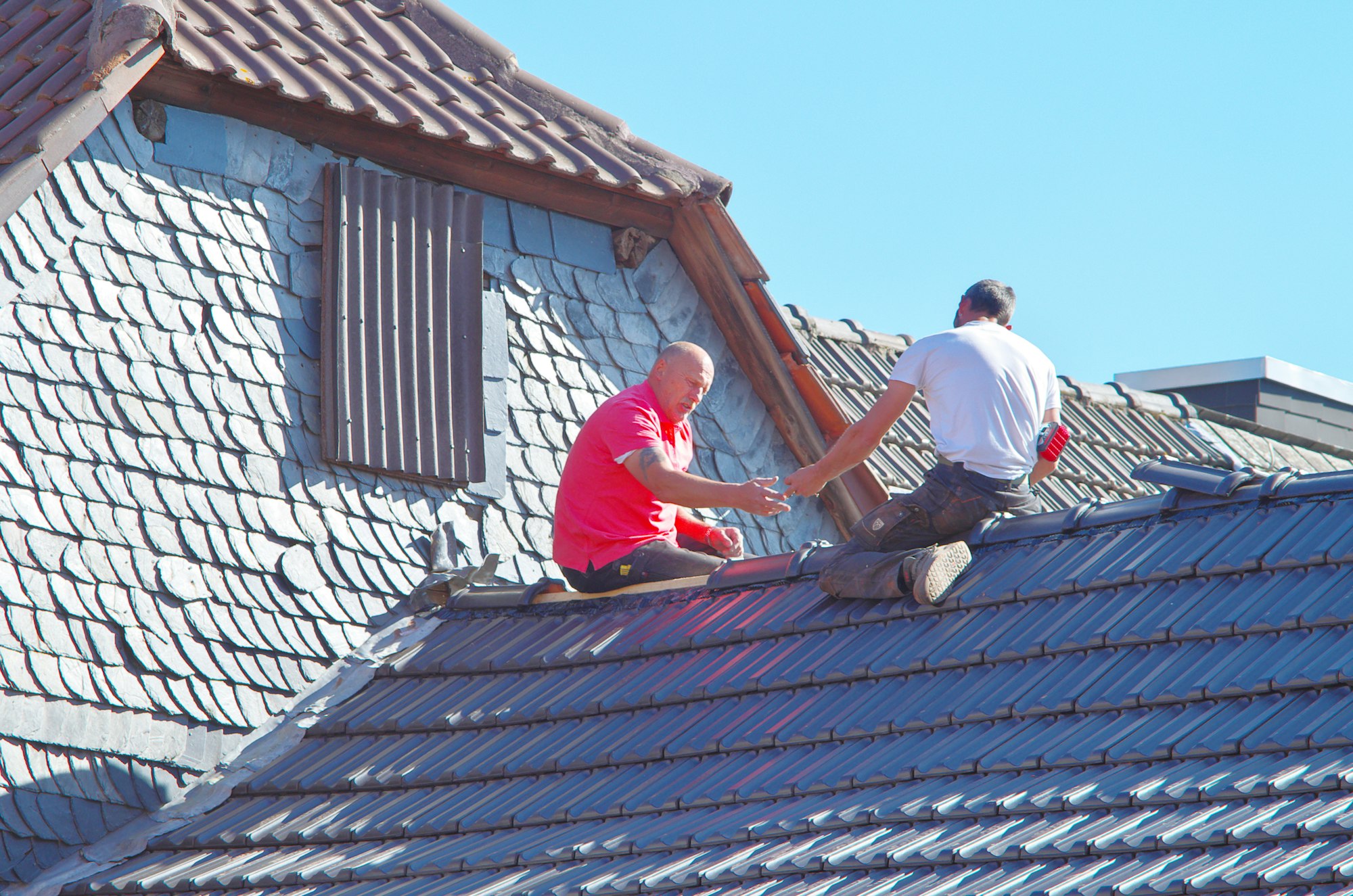
The question arrives every year somewhere between the first hard freeze and the end of February, usually phrased as a worry rather than a question. The roof needs doing. Should we wait until spring?
It is a fair thing to ask, and the honest answer is that winter roofing in Johnson County is neither the bad idea some people assume nor the non-event others pretend. Shingles behave differently when it is cold, the installation changes to suit, and the difference between a good winter roof and a bad one is whether the crew actually makes those changes. Here are the beliefs worth correcting before you decide.
Myth: Shingles Simply Cannot Be Installed in Cold Weather
They can, within limits, and the limits are set by the manufacturer rather than by a universal rule. The Asphalt Roofing Manufacturers Association declines to name a single number and tells installers to refer to manufacturer instructions for specific directions related to cold weather installation temperature. Its own working test is practical: choose an installation temperature where the shingles are sufficiently flexible to facilitate installation.
Where manufacturers do draw a line, it tends to land in the same place. Owens Corning's cold weather technical bulletin applies its precautions when the air and surface temperatures are at or below 40 degrees Fahrenheit. Malarkey's equivalent bulletin uses the same threshold. In Joshua that describes a great many January mornings and relatively few January afternoons, which is why winter work here is often a question of what time the crew starts rather than whether they come at all.
Myth: The Shingles Will Seal Themselves Eventually, So the Season Does Not Matter
They probably will seal eventually. The problem is the gap in between. ARMA explains the mechanism: most asphalt shingles include thermally activated asphalt sealant, and sealing time will vary depending on the slope of the roof, its orientation and the amount of sun and heat exposure. Malarkey puts the same point more cheerfully, noting that a little sunshine goes a long way to activating the seal-down.
The part that matters to a homeowner is what happens while the roof waits. Malarkey's bulletin states it directly: wind warranties apply only when shingles are sealed, whether by hand or by the self-seal strips. An unsealed roof in February is a roof whose wind coverage has not started yet, sitting through the windiest stretch of the North Texas year. That is the real argument for hand-sealing, and it has nothing to do with aesthetics.
Myth: Hand-Sealing Is Something Roofers Add to Pad the Bill
It is a documented procedure with a specified method, and the manufacturers describe it in detail because they expect it to be done. Owens Corning's instruction is that each shingle should be hand sealed using four one-inch dabs of ASTM D4586-compliant asphalt roof cement, evenly spaced on laminate shingles approximately one inch from the leading edge. Strip shingles get two dabs per tab, approximately an inch from the leading edge and the corner of each tab.
Malarkey's version is nearly identical: four quarter-size dabs of ASTM D4586 roof cement, evenly spaced underneath, with the shingle pressed firmly into the adhesive. Designer shingles get a dab under each tab, and hip and ridge pieces are sealed under their lower corners. Both manufacturers also warn against generosity. Owens Corning cautions that the cement must not squeeze out beyond the leading edge of the shingle, and that excessive amounts of asphalt roof cement can cause the shingles to blister. More is not better here; it is a defect.
If a winter quote does not mention hand-sealing, ask about it before you sign. It is the step that gets your wind coverage working now rather than whenever the sun gets round to it.
Myth: A Cold Day Only Affects the Crew, Not the Material
Cold changes the shingle itself. ARMA's description is that asphalt shingles tend to become less flexible as temperature decreases, and that for some sealants the bond between courses becomes less flexible in cold weather, so roof traffic may break the sealant bond. That is a specific risk on a job where people are walking on courses laid an hour earlier.
Which is why handling matters more in winter than in June. ARMA advises storing shingles indoors to keep them warm prior to application, avoiding bending, throwing or dropping bundles in cold weather, and using extra care, including warming of shingles, in applications where lifting or bending the shingle is required. It specifically flags woven and closed cut valleys, which require shingles to be bent and may result in shingle damage. Malarkey adds the practical version: store materials in a heated facility, lay bundles flat, open them so the backs absorb sun heat, and unroll underlayment into manageable lengths and lay it out in the sun to relax before installation.
Underlayment deserves its own note. Malarkey warns that self-adhesion is weakened by cold and moisture, so it may need temporary fastening until it bonds. A sheet that looks stuck down at nine in the morning has not necessarily bonded.
Myth: The Crew Can Just Work Through the Frost
This is the one worth being firm about, because it is a safety question before it is a quality question. ARMA's guidance is to be very careful when working on sloped roofs and that it is advisable to wait until the roof surface is free of ice and frost for safer shingle roof application. A Joshua roof that was below freezing at dawn is frequently still slick at nine, and a crew that starts anyway is taking a risk on your house.
Fastening changes too. ARMA notes that when nailing, the shingles must be flat, otherwise the nail may break through the shingle surface. Malarkey suggests considering hand-nailing in cold conditions to reduce issues with underdriven and overdriven fasteners, and adjusting compressor pressure as the deck temperature changes through the day. It also recommends leaving a small space of about a thirty-second of an inch between shingles so that warm-weather expansion does not buckle them later. Owens Corning gives the same instruction in its own terms, limiting the butt joint gap to no more than a sixteenth of an inch.
Winter Roofing Questions Joshua Homeowners Ask
Is a winter roof worse than a summer one?
Not if the cold-weather procedures are followed. The shingles, the deck and the flashing are the same; what changes is handling, nailing and sealing. A properly hand-sealed winter roof is in better shape through the spring than an unsealed one laid on a mild day in a hurry. A winter roof installed as though it were July is the one to avoid.
Should I wait until spring if the roof is only leaking slightly?
Waiting costs more than people expect, because water in the decking does not pause for the season and spring is also hail season, which is when crews are hardest to book. If the roof is actively leaking, the sensible path is usually a repair now and a replacement scheduled on your timetable rather than on the weather's.
How cold is too cold in Johnson County?
Below about 40 degrees the manufacturers' cold-weather procedures kick in, and below freezing the roof surface itself becomes the limiting factor because frost and ice have to be gone before anyone works. In practice that means winter jobs here start later in the day and may run shorter, which is a scheduling difference rather than a quality one.
What should I ask a roofer quoting winter work?
Three things. Will the shingles be hand-sealed, and with what. How will the materials be stored and warmed before they go up. And what is the crew's rule for frost on the deck in the morning. Any roofer doing this properly will have ready answers, and a free roof inspection is a reasonable place to ask them before the quote arrives.
Sources
Weighing a winter job against waiting?
The walkthrough is free anywhere in Johnson County, and the written scope spells out hand-sealing, storage and the frost rule so you can compare quotes properly.
Book a walkthrough — (682) 399-3006Ask the Three Cold-Weather Questions
A walkthrough costs nothing, takes under an hour and ends with photographs and a written scope that says how the roof will be sealed, stored and started.
Insured crews · Joshua and the rest of Johnson County